 As I write this, members of the Kentucky General Assembly are considering controversial bills that effectively would limit the freedom of LGBTQIA+ students and their equal access to education in the public schools of our Commonwealth.
The institution I am privileged to lead, Berea College, has long taken a fully inclusive approach to issues of gender identity. Our scriptural motto, “God has made of one blood all peoples of the earth,” compels that approach, which welcomes all into our community regardless of any aspects of their personal identities. You will find at Berea persons who represent all of the identities encompassed in the LGBTQIA+ list together with others who identify as heterosexual males and females. You will also find Bereans who hold to a conservative Christian point of view with regard to gender and so do not support the validity of non-binary gender identities. I will not say that such differences are easy to navigate in a small community of about 2,500 Bereans, but I can say that we are a better institution because of that diversity along, with the other forms of diversity that come with our inclusive identity. I firmly believe that the same can be said for all of Kentucky.
Beyond its scriptural basis, we have other reasons for this choice. First and foremost, I think of this as a clear matter of justice and fairness. And beyond basic fairness, those opposing this proposed legislation have provided evidence and examples of the traumatic and lasting effects such measures can have on young persons.
Under Section 183 of the Constitution of Kentucky, the General Assembly is charged with the responsibility to provide an efficient system of common (public) schools for all of Kentucky’s children. The Supreme Court of Kentucky has recognized that “the framers of our constitution intended that each and every child in this state should receive a proper and an adequate education, to be provided for by the General Assembly.” Rose v. Council for Better Education, 790 S. W. 2nd 186 (1989).
In that case, the court quoted from the landmark decision of Brown v. Board of Education, in which the Supreme Court of the United States observed that “education is perhaps the most important function of state and local governments.” The Supreme Court continued (using the gendered language then common) that “it [education] is a principal instrument in awakening the child to cultural values, in preparing him for later professional training, and in helping him to adjust normally to his environment. In these days, it is doubtful that any child may reasonably be expected to succeed in life if he is denied the opportunity of an education. Such an opportunity, where the state has undertaken to provide it, is a right which must be made available to all on equal terms.” 347 U. S. 483, 493 (1954).
To deny any LGBTQIA+ student equal access to education on pain of sacrificing their identity is unconscionable and unlawful. In addition, I do not see any justification for the government to take away fundamental freedoms of identity from any person in relation to education, parental rights, healthcare or any other aspect of their existence.
There are some pragmatic reasons that also argue against such legislation. Students of today will live and work in a highly pluralistic society, and most are encountering in school and at college the diversity that will be part of their lives and work after graduation. Further, these sorts of laws are not business friendly. It is very much in Kentucky’s interest to attract the best companies in the country to do business here, providing tax revenue and great jobs for Kentuckians.
Let the example of Berea College be a guide in addressing these issues. I submit to my fellow Kentuckians that the many benefits of freedom and inclusivity are far preferable in all respects to the imposition of restrictions in matters of identity.
 Our nation is very divided these days. There are many reasons for this, but one very important one is because not everyone is fully included in the understood history of our Commonwealth. The contributions and the experiences especially of Kentuckians of color have long been overlooked. Last year, Berea College entered into a partnership with Kentucky State University, the Muhammed Ali Center and the Thomas D. Clark Foundation, to work to address this silencing of the past. The partnership is called the Association for Teaching Black History in Kentucky, and the effort is essential for creating a new, more inclusive history in our state, one that can enrich all Kentuckians.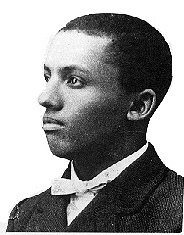
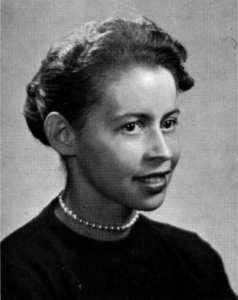 Every year, on the second Monday in October, many Americans observe Indigenous Peoples’ Day. One way we mark this holiday is to celebrate and honor Native peoples by commemorating their histories, cultures and achievements. For this year’s observance, Berea College highlighted the remarkable life and legacy of Dr. Helen Maynor Scheirbeck, an alumna and political scientist whose life’s work was advocating for American Indian tribal recognition, civil rights, educational opportunity and equality at the highest levels of government. A Notable Berean banner bearing her name and contributions hangs on our campus.



 In light of a recent Supreme Court decision, it’s up to us, on an individual and organizational level, to combat global climate change.
 With construction slated for two new technology-focused buildings, Berea College is embarking on a technology future like no other, a future that is inclusive of everyone while attempting to solve humanity’s most pressing technological issues. The combination of technology, the liberal arts, and practical hands-on experience for our underserved student population will have implications for Appalachia and beyond as our capable students continue to access technological fields and careers.
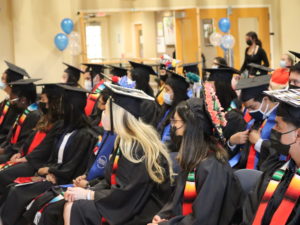
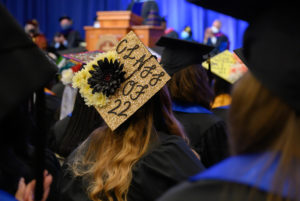
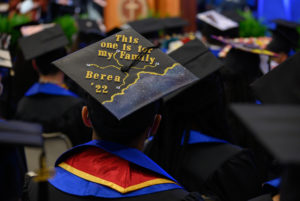
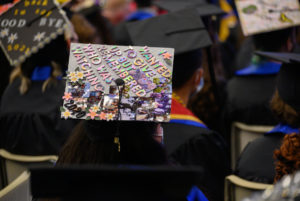
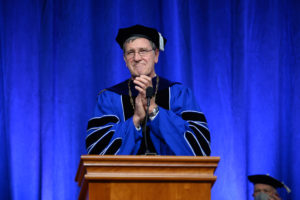 For the first time since 2019, Berea College celebrated commencement in person. The joyous day did not mark the end of the pandemic, but it did prove one thing about this group of graduates: they are resilient. They have succeeded despite adversity, and that is something we should celebrate.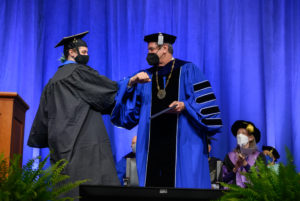
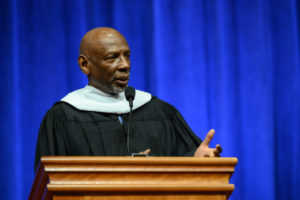 In fact, our commencement speaker, Geoffrey Canada, made the point that the best of America is yet to come because of this next generation. Canada, author and creator of the Harlem Children’s Zone, which was replicated throughout the country when President Barack Obama created the Promise Neighborhoods Initiative, spoke of how famed suffragette Susan B. Anthony did not see women get the vote in her lifetime. But she predicted it would happen, and the next generation saw it through after her death. Whatever important goals our generation has not been able to accomplish, this already talented and intelligent group of graduates, steeled by surviving a global pandemic, will bring to fruition one day. Mr. Canada asked them to promise him that they would take up that challenge; from the platform I could see eager assent in 265 faces!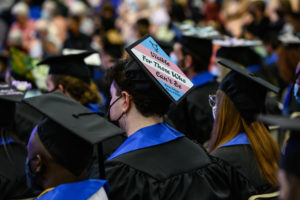

 Amid all the news on Ukraine and the war its people are enduring, have you stopped to consider how much you may have in common with Ukrainians? There are striking similarities between Appalachian people and culture and the people and culture of the Carpathian Mountains in western Ukraine.