 This past December, Berea, and the world, lost a friend and an icon. bell hooks, née Gloria Jean Watkins, spelled her pen name in all lower-case letters because she wanted people to focus on her work, not her person. But it was her work and her person that inspired the Berea College community to establish the bell hooks center and even to name a campus road after her. And that same community prompted bell to establish the bell hooks Institute at Berea College. These named places will remind current and future community members of one of the world’s great minds, a Kentuckian, an international hero of feminism and, for the last 17 years of her life, a Berean.
Born in 1952 in the segregated community of Hopkinsville, bell transcended the limitations society tried to place on her. She studied English at Stanford University, earned her master’s degree from the University of Wisconsin-Madison and her Ph.D. from the University of California, Santa Cruz. The author of dozens of books ranging in topics from race and gender to poetry and children’s literature, bell’s prolific teaching career stretched across many prestigious schools, including Yale, Oberlin, The City College of New York and, ultimately, Berea College, where she chose to continue her life-long work in social justice.
There are not enough words available in this column to express the impact bell hooks had on society, both globally and locally. Her feminist refrain—feminism is for everyone!—was and is so profoundly Berean in its inclusiveness. She welcomed me, too, as a fellow feminist, and we became friends, but she was not shy to point out when my thinking needed correction. It was always an honor to have her expand my horizons because she was so smart and so fierce.
bell had many friends and they all, like me, honored and treasured their relationships with her. Her tent was so very welcoming, capacious and full of learning opportunities. She read at least a book every day and always eagerly shared what she had learned. We will miss bell so much and will always be proud that she chose to associate herself with us and that she allowed us to put her name on the center where we celebrate all gender identities, seeing their inclusion as fundamental to the welcoming mission and identity of Berea College.
Her work, her life and her presence spoke to five of Berea’s eight Great Commitments: our commitments to the liberating potential of a liberal arts education, to interracial education, to gender equality, to sustainability and to Appalachia. That close alignment is no surprise because another conviction of bell’s that made her such a true Berean was that love, the impartial love celebrated as well by Berea’s founders, was the answer to most of what is wrong with our culture.
In her classic book, “All about Love: New Visions,” she wrote about the openness of a generous heart: “This is the most precious gift true love offers—the experience of knowing we always belong.”
That experience—belonging—is denied so many in our society based on superficial differences like race, gender and class, but bell admonished us to be better, to see in each person potential and worth. We can honor bell’s legacy by opening our tents and our hearts in a way that makes that most precious gift less rare. Even as that gift is bestowed more frequently, it will still be so very precious.
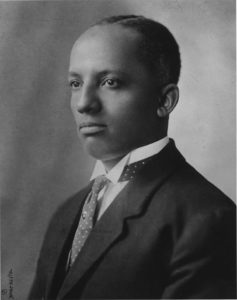
 The ardent abolitionists and radical reformers who founded Berea College were motivated by their Christian faith. The scripture, “God has made of one blood all peoples of the earth,” (Acts 17:26) inspired them to create a school open to everyone of good moral character. Though much has changed since 1855, this verse, which has become the Berea College motto, continues to inspire our sense of radical inclusivity. It was one thing to be an abolitionist in the North, but being one in the South was dangerous, a fact that all early Bereans knew acutely. And yet they prevailed.
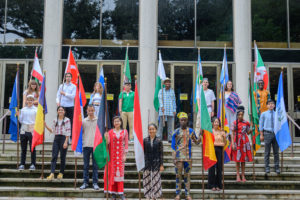 Should we worry that these inclusive ideals might alienate some supporters? In fact, experience shows that friends and supporters are reassured by considering the Berea experience, precisely because of its inclusivity. Here a conservative Christian will encounter a student raised in another of the great faiths and both will benefit by the engagement that can only happen because both are welcome. Here the person who prefers a simple view of the gender binary will encounter a person of nonconforming gender identity, and both will come to a deeper realization of just how mysterious is human sexuality. Here the politically conservative person will encounter someone on the left, and they will come to understand that the other is not in fact a demon, but a thoughtful and patriotic fellow American. All come to appreciate inclusivity and the institution that welcomed them in all of their diversity.
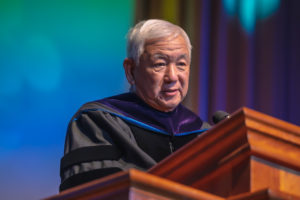

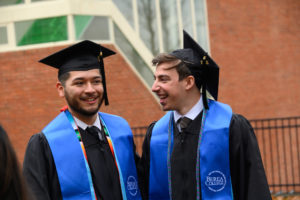
 The increasing impacts from global climate change compel all of us to do everything possible to reduce carbon emissions. With the recent completion of a hydroelectric generating station on the Kentucky River near Ravenna in Estill County, Berea College is leading by example.

 In August, I began telling you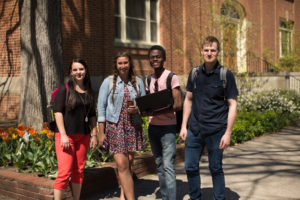
 At Berea, we’ve known for a long time that fitting in, belonging, and feeling like you matter are important to a student’s success. This stretches back to our roots as the first interracial and coeducational college in the South, and our motto—God has made of one blood all peoples of the earth—reflects our commitment to ensuring every Berea student feels they fit in here. Together with our no-tuition model, those two ingredients have been our recipe for success.
 Twenty years ago, our nation faced a defining and harrowing moment. Past generations had moments like it in Pearl Harbor and the assassination of President John F. Kennedy, but for us the horror was live on television. It was an event that etched traumatic images into the national psyche as each of us marked where we were and what we were doing that fateful Tuesday morning when the World Trade Center towers were taken down by an unprecedented act of terrorism. It sparked grief and fear. It sparked a renewed sense of patriotism. And it sparked war.
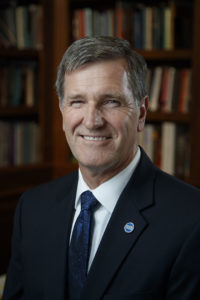 Did you know that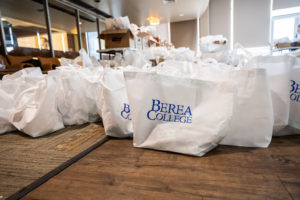
 To ensure that students feel supported to successfully bridge through college, one important example is a free dental clinic that tackles some of the disparities our students experience. Another is subsidized study abroad, often a universal option for high-wealth students but much less common for low-wealth students.
 Is it possible to love something that is imperfect? Naturally, it is. We trust that God loves us, despite our flaws. We love our children, even when they behave in ways we dislike. Love is not contingent upon perfection. In fact, when it comes to things we love, we strive to improve them, to move them closer to more perfect, with the understanding we may never reach it.
 When the Rev. John G. Fee founded Berea College in the 1850s, he was inspired to base his school on what he called “the gospel of impartial love.” This radical inclusivity meant that all persons seeking education, regardless of means or any social constraints then in effect, were invited. Black and white students were welcomed, as were women and men.
 As Berea’s own feminist icon bell hooks teaches, our struggles across race and gender differences are interconnected. Learning from her and other feminists of color, we know that diversity of race and gender on Berea’s campus will enrich the educational experience of all. We have much to learn from each other, and that learning cannot happen through exclusion. We have further come to realize the significance of intersectionality, that persons who find themselves in more than one marginalized identity category often experience exclusion and mistreatment to even greater extent.