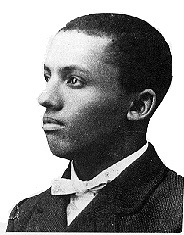
As an institution, Berea College has a deep connection with Black History Month. 1903 alumnus Carter G. Woodson is the known as the Father of Black History. In 1926, Woodson created Negro History Week, the precursor of Black History Month. And of course, Berea College is now home to the Carter G. Woodson Center for Interracial Education.
Woodson graduated from Berea in one of the last graduating classes that would include African Americans until 1954. In the first decade of the 20th century, the tides of segregation were rising in the South, and Berea’s African American enrollment had begun to decrease. Then, in 1904, Kentucky’s Day Law was passed barring integrated education throughout the State. Berea College, then the only interracial school in Commonwealth, was the sole target of this law, an injustice our institution fought all the way to the U.S. Supreme Court. The case, Berea College v. Kentucky (1908), was decided against Berea, and interracial integration at Berea went into complete hiatus. Arrangements were made to relocate Berea’s students of color to HBCUs (Historically Black Colleges and Universities), while the College also sought to continue to serve the African-American population by working to found the Lincoln Institute in Shelby County, Kentucky.
After the unjust segregation laws were rescinded in the early 1950s, Berea began to work back toward its original goal of educating black and white students together. Sixty-eight years later, Berea’s African American student population stands at about 21% of the student body. With increases in the number of international students and other minorities, Berea’s overall population of students of color now stands at about 40%.
Efforts to recruit more African-American students started slowly. By the late 1960s, a time when racial tensions were high across the country and also on Berea College’s campus, black students accounted for only six percent of the student body, and there were no black instructors or administrators. Protesting the slow pace of progress, about 50 students staged a campus walkout. In the aftermath of the protest, Berea introduced its first course in African-American history, and students formed the Black Student Union and the Black Music Ensemble. Both the BSU and the BME continue today as integral parts of our campus culture and community.
Racial tensions continued throughout the early 1970s. When three black students were harassed by white citizens, the students were arrested for carrying a concealed weapon—which was later determined to be “a big stick.” Black students staged a sit-in in Lincoln Hall, occupying the president’s office, to demand fair treatment of their fellow students. Eventually, the charges were dropped.
Berea College has come a long way since that time. The population of students of color on campus has continued to increase, and some of those early activist African-American students of the 1960s and 1970s have gone on to become faculty and administrators at Berea. They include Dr. Jackie Burnside, professor of sociology and chair of Academic Division III; Virgil Burnside, vice president for Student Life; and Andrew Baskin, chair of the African and African American Studies Department. Other graduates have thrived in positions of influence elsewhere.
At present, we have a much more diverse faculty and staff, and we have continued to enhance our recruitment of African American students by expanding our admissions territories to include more urban areas within and near Appalachia, first in Lexington, Louisville, Cincinnati, Knoxville, Birmingham, Atlanta, Greenville and Charlotte and more recently adding Nashville and Pittsburgh. Given the shift in the racial makeup of Appalachia over the last several decades to include Hispanics, Asians, and other ethnicities—coupled with our commitment to admitting international students—it seems likely that our ethnic diversity will continue to increase. As an institution, we will continue to honor the original motivation of our founders, still guided by the motto they chose, “God has made of one blood all peoples of the earth.”
In addition to our recruitment efforts, we have increased our focus on retention and student success. These efforts extend across all student populations at Berea, affirming identity and working to ensure that all students understand and feel that they belong at Berea. Programs that are part of this effort include the Black Male Leadership Initiative, the Appalachian Male Leadership Initiative, the Hispanic Male Leadership Initiative, and programs that operate out of the Black Cultural Center. These include the S.U.C.C.E.S.S. (Students United to Create Cultural and Educationally Successful Situations) program, which offers incoming African American students mentoring, skill building, study sessions, and other forms of social support. For African American female students, there is F.A.B.U.L.O.U.S. (Fierce Appropriate Beautiful Unique Loving Outstanding Understanding Serious), an initiative for assisting black female students in their transition to college.
Programming is not limited to students, however. It is vital that faculty and staff have the opportunity to develop a better understanding of the heritage and history of our African American students, as well as the spaces our students inhabit before they arrive on campus. In an effort to provide that context, newly-hired faculty and staff are encouraged to take the Berea College Civil Rights Tour and Seminar, a week-long excursion to Civil Rights era sites throughout the South.
These initiatives honor Berea’s interracial commitment and heritage, ensuring that it will continue to be one of few truly interracial schools in the nation, a place where students of all races interact and engage, learn from one another, and, ultimately, care for one another as people of one blood.
To foster recruitment, retention, and student success, we recently established the African American Opportunity Fund (AAOF). If you are interested in supporting this fund, visit the AAOF page.
 Christmas in Berea is an especially beautiful and moving time. Laurie and I deeply enjoy and appreciate the time we get to spend in fellowship with other Bereans, from our annual Christmas Concert held at Union Church to numerous campus celebrations. The lighting of the tree on College Square proclaims the wonders of the season and, truly, they fill the campus and the town with spirit.
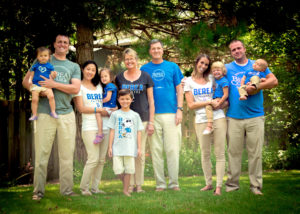


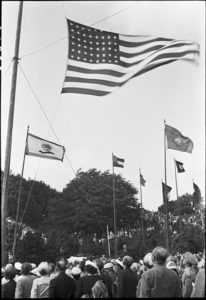 For myself and a number of other Bereans, Independence Day this year will be celebrated in an unusual location: the rural town of Rebild, in Denmark. The town has been celebrating American independence since 1912, and the four-day festival, called
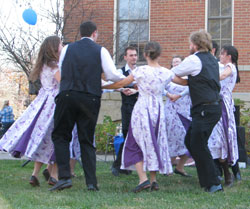 Deborah Thompson, coordinator of our Country Dance Program, notes that the values of community cooperation, well-rounded education, and healthy activity have bonded Berea and Denmark for a long time. “We are excited to share our Appalachian American music, dance, and culture with the Danes and to learn more about their beautiful country,” she said. “There is nothing like the students experiencing another culture first-hand.”
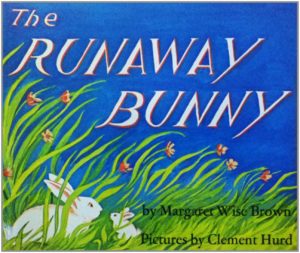 The Reverend John G. Fee founded Berea College upon the “gospel of impartial love,” and my hope is that all of us can be as relentlessly loving as that gospel demands. My remarks at Chapel are below, along with a video of the service that includes my wife, Laurie, reading from The Runaway Bunny.
 For example, Berea College operates a 500-acre farm and trains our agriculture students in sustainable organic farming. Our Gardens and Green House, certified organic since 1998, use compost made from food waste collected daily from Dining Services. There is also an apiary used for honey production, pollination, and teaching. Our goal with the farm is to present a model of farming that is ecologically sound, socially acceptable, economically viable, and humane.
 The SENS house serves as a way SENS majors can live out what they learn in their classes. Mostly self-sufficient, the SENS house uses different technologies for energy conservation and production, water conservation, waste treatment, and use of local construction materials. Four students live in the house while developing and implementing educational programs in sustainable living and ecological design.
 One of our latest efforts to raise awareness of everyday sustainability involves maintaining campus landscaping. This month we will be placing signs on our lawns explaining the value of things many regard as unsightly and a nuisance, like dandelions and other “weeds.” Naturally occurring lawn plants that many people try to eradicate are actually very important for local ecosystems and food chains. Dandelions are among the first plants to bloom in spring and allow our critical pollinators—bees—to survive those early spring cold snaps. The bees themselves are also crucial to a thriving ecosystem, so to protect them and to achieve a balanced ecosystem on campus, we have a no-spray policy. We do not use pesticides or herbicides to kill insects or plants that some regard as undesirable, except in areas like our athletics fields where particular turf conditions are necessary. This makes our lawns and campus friendlier to humans as well.
 From living-learning laboratories for students to everyday policies and practices for faculty and staff, we are creating a mindful and sustainable community that acts, not in opposition to nature, but in concert with it. We are counting on our students to absorb this commitment on campus, and to take it to the world beyond after they graduate.

