I hope many of you heard about or have seen the testimony given by Vice President for Finance, Jeff Amburgey, to a House Ways and Means subcommittee on college endowments. Jeff was asked to explain how Berea uses its endowment to pay the cost of tuition for all of its students, an accomplishment that is especially striking in an era where the cost of a college education has risen so dramatically. Jeff explained how we carefully manage our endowment and that the gap between the cost of providing an education to 1,600 students and the income generated by the endowment is covered by generous donations from alumni and friends to the Berea Fund. Read an article with a link to video of Jeff’s testimony.
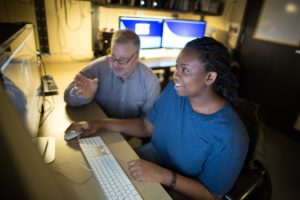
Certainly these financial procedures are essential to the Berea Way, but, as Jeff also pointed out, Berea’s success is rooted in the values established by the Great Commitments. Because of the Seventh Great Commitment, which reminds us to live in a sustainable fashion, Bereans have developed a knack for joining idealistic goals with pragmatic solutions, and nowhere is this more evident today than in our continuous improvement team led by Aaron Beale. Continuous improvement describes a variety of methods used for improving processes, which even though it is often associated with manufacturing, can be used in many different occupations. For example, at Berea, continuous improvement has been used by the registrar’s office to make scheduling classes easier, by the sustainability office to make recycling more efficient, and by the marketing and communication office to simplify the work of our photographers and videographers, to name but a few of its applications.
Improving our efficiency enables us to do better work with fewer resources, and that means we can educate more students with our fixed level of resources. But, efficiency is about sustainability in more ways than one. Continuous improvement can also be the key to making workloads more manageable for faculty and staff. Derrick Singleton, our vice president for operations sustainability, who brought continuous improvement to the College from his previous work in industry and developed the team, likes to say that the real purpose of continuous improvement is “to alleviate your pain.” A couple years ago, the continuous improvement office, which was then led by the recently retired Richard Smith, made a video highlighting how we use these processes to save money and enhance the quality of our working lives. I hope you will take the time to view it as it provides a unique, behind the scenes view of the college and because I hope some of you will be inspired to apply the principles yourself.
I should also note that our continuous improvement efforts serve our students in another way. Students who participate in these efforts learn skills that are applied almost universally in the corporate world. Because we involve students in all phases of these continuous improvement projects, from conception to implementation, they will enter the work world prepared to contribute in leadership roles.
To learn more about the various methods for achieving continuous improvement and how we use them to enhance the mission of Berea College, see http://berea.edu/ci/.
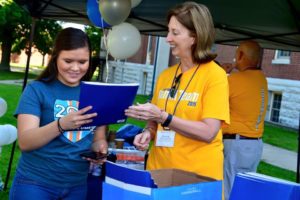 ne Frank said, “How wonderful that no one need wait a single moment to improve the world.” This aspiration has been ever present at Berea College, but on September 1st we will be celebrating not only the new school year, but also a campus first. That day will be our first ever Giving Day, as we invite our supporters to help us raise $25,000 in 25 hours
 Laurie and I always think especially about what arrival day means for our first-generation college students and their families. As we help the incoming class move in, we encounter their excitement, their pride, their anxiety, all their hopes and fears as they face such an important transition and transformation in their lives. In that situation I am so reassured that our faculty and staff care deeply and have the experience successfully guide them through the life-changing and transformational experience that can only happen here. Berea’s mission isn’t just talk. It’s deeply rooted within the hearts and souls of everyone on campus. This passion and commitment to our mission are the reasons we are celebrating Giving Day.
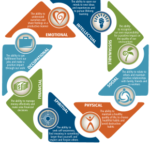 that our newly created FRESH Start initiative, will introduce understanding of stress and coping skills to our students in their first year, as a way to improve their academic performance and health, with the added benefit of providing a model for understanding how activities in one area of life connect to other areas. The model uses eight dimensions of wellness: emotional, financial, intellectual, occupational, physical, social, spiritual, and sustainable. Through the program, students will see that one’s occupational wellness influences all the other dimensions, not just financial wellness, as some might expect. Understanding these interrelations helps prepare students for success throughout college and also, for their futures, to seek synergy when facing similar challenges later in life.
 Recently there have been conversations in our state about whether higher education is a right or a privilege, and whether we citizens want our tax dollars to support post-secondary education. I certainly do want the taxes I pay to support higher education for our young citizens. And in my opinion the right or privilege debate misses the most important point. If Kentucky is to remain competitive in the 21st century, 21% of adults in the state holding a college degree simply will not cut it! So, whether you consider it a right or a privilege, we should really be thinking of higher education as a necessary and worthwhile investment. We need a partnership between public institutions and private institutions to move us forward in educating more young Kentuckians, and we need the support of state government in Frankfort to do so.
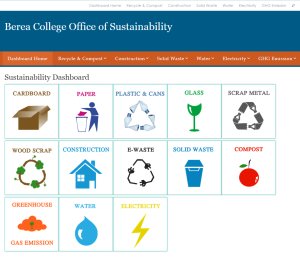 The college has long been mindful of the need to recycle, to reduce carbon emissions and to limit our use of electricity. Now, thanks to Joan’s team, led by Tsering Dhondhen ’17, data tracking & analysis coordinator, and with the help of Dr. Scott Heggen, lecturer in computer science, and his student Phyo Phyo Kyaw Zin ′16, we can all see the progress being made through a newly developed dashboard that tracks our efforts on a month-to-month basis.